

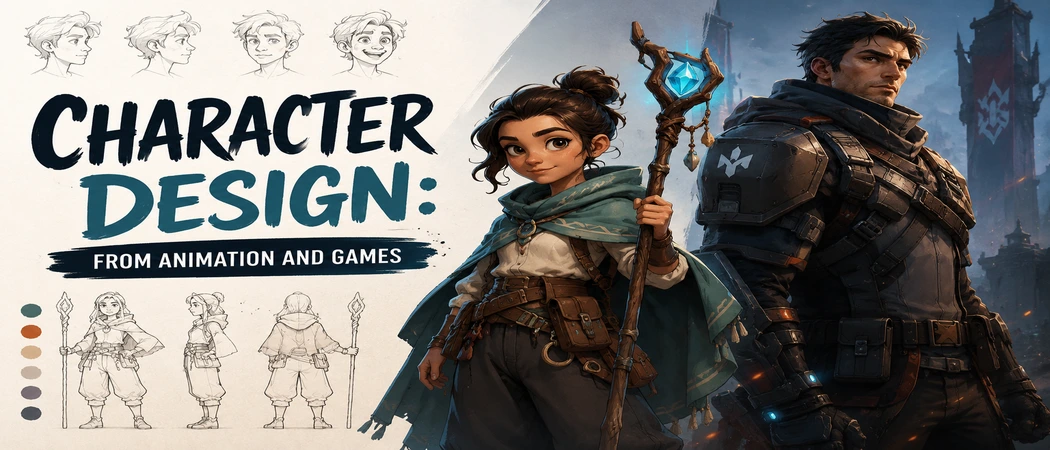
A well-designed character instantly draws you in. The way they look — from their outfits to accessories — reflects who they are, where they come from, and what their role is. Great character design strikes a balance between familiarity and originality, making characters both relatable and fresh. This balance helps characters stay memorable long after you first see them.
But character design isn’t only about appearance. For a story to truly resonate — whether in animation or games — the characters must embody emotion, depth, and purpose.
Although the goal remains the same — to bring characters to life — the approach varies depending on the medium.
In animation, character design gives life and soul to the story. Unlike live-action films, animated characters aren’t constrained by real-world limitations like an actor’s physical attributes or performance skills. This freedom lets animators infuse characters with exaggerated expressions, stylized movements, and imaginative appeal, making them more expressive and universally relatable.
Strong design ensures that animated characters leave a lasting impression, which can translate into audience loyalty, merchandise opportunities, and long-term franchise value.
In video games, characters are more than just figures on screen — they are the vessel through which players experience the game. A well-designed game character allows players to immerse themselves in the story, understand the character’s motivations, overcome challenges, and evolve alongside them.
When players connect emotionally with a character’s journey, the game transforms from simple entertainment into a deeply personal experience.
Great character design can elevate a story or game into a lasting franchise. Two prominent examples illustrate this power:
These examples show that character design is far more than decoration — it can define a franchise’s identity, emotional impact, and long-term success.
If you want to design a character that resonates with audiences, consider these essential principles:
Technology is reshaping the future of character design, expanding creative possibilities beyond traditional media.
Artificial Intelligence is becoming a valuable tool for character creators. AI-powered systems can analyze trends, audience preferences, and design elements to generate concepts quickly. Artists can then refine and personalize these ideas, accelerating the creative process while maintaining originality.
In virtual environments such as VR, AR, and the Metaverse, characters must do more than simply look appealing. They need to be interactive, customizable, and adaptable across multiple digital platforms.
Designers must also consider ethical representation, diversity, and inclusivity while creating avatars that feel authentic and accessible to global audiences.
This evolution transforms characters from static story elements into dynamic digital identities that can grow and evolve alongside users.
Whether in animation, video games, films, or virtual worlds, character design remains the emotional foundation of storytelling. Timeless principles such as personality, audience awareness, backstory, and visual appeal continue to guide successful designs.
At the same time, emerging technologies like Artificial Intelligence, Virtual Reality, and the Metaverse are redefining what characters can become. In this rapidly evolving landscape, character design sits at the intersection of art, psychology, technology, and human connection — creating experiences that inspire, immerse, and endure.