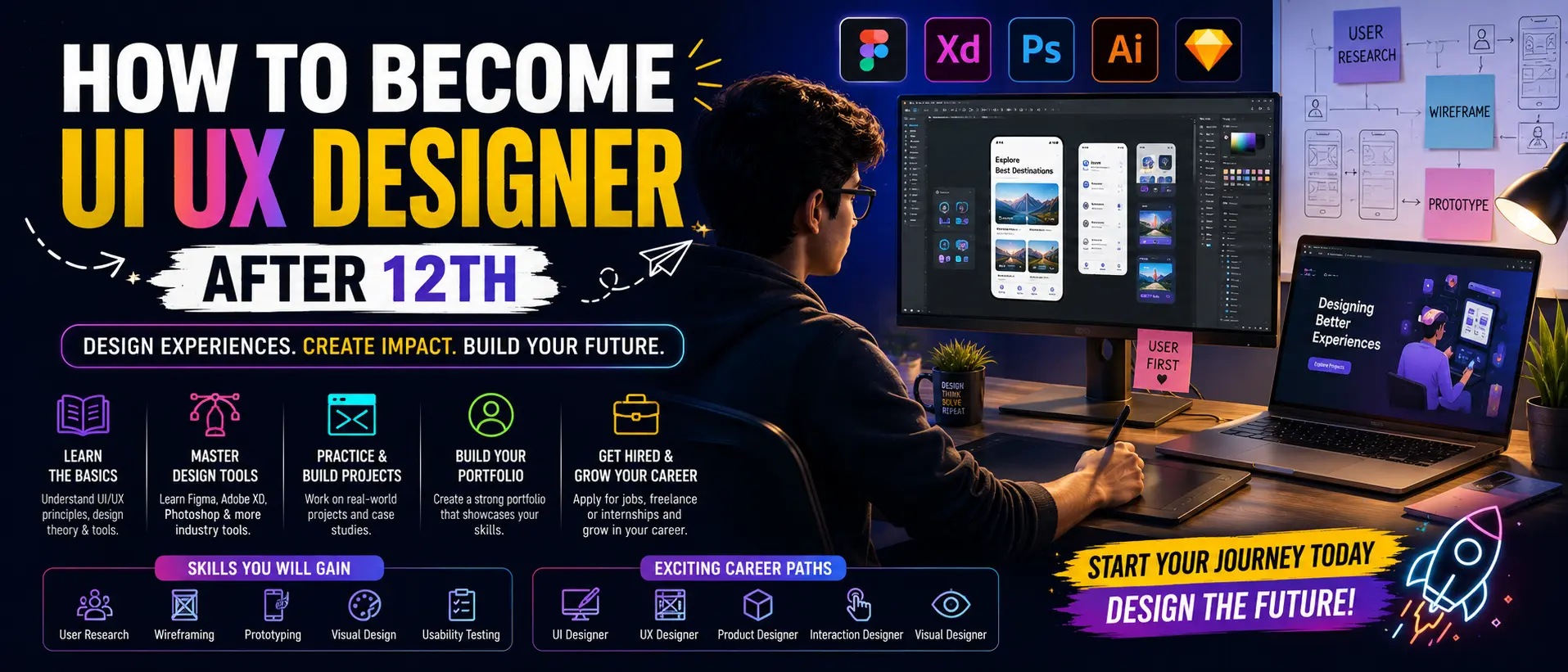
With the rapid growth of websites, mobile apps, and digital products, UI/UX design has become one of the most in-demand career options for students after 12th. Companies are constantly looking for talented designers who can create visually appealing interfaces and deliver seamless user experiences.
If you're wondering how to become a UI/UX designer after 12th, the good news is that students from Science, Commerce, or Arts backgrounds can pursue this career. By enrolling in a professional UI/UX Design Course, learning industry-standard tools, and building a strong portfolio, you can kick-start a rewarding career in the design industry.
UI (User Interface) Design focuses on the visual appearance of digital products, including layouts, buttons, colors, icons, and typography.
UX (User Experience) Design focuses on making websites and applications easy, efficient, and enjoyable to use. It involves understanding user needs, conducting research, creating wireframes, and testing designs.
Together, UI and UX designers create digital experiences that are both functional and engaging.
Yes. You do not need a specific academic stream or engineering degree to enter this field. Many successful UI/UX designers start their careers by joining a specialized UI/UX Design Course after 12th and developing practical skills through real-world projects.
Employers often prioritize creativity, problem-solving ability, and a strong portfolio over formal qualifications.
A professional UI/UX Design Course provides structured learning and hands-on experience that helps students become job-ready faster.
A quality course generally covers:
Many institutes also provide mentorship, placement assistance, and internship opportunities to help students begin their careers with confidence.
Students from Arts, Commerce, or Science streams can pursue UI/UX design after completing Class 12.
Learning from experienced mentors can significantly shorten your learning curve. Choose a course that emphasizes practical assignments, live projects, and portfolio building rather than only theory.
Industry professionals commonly use the following tools:

Figma

Adobe Illustrator

Adobe Photoshop

Adobe Dreamweaver

Bootstrap

VS Code

Visily

Creatie AI

Miro

WordPress

Webflow

Uizard
Becoming proficient with these tools prepares you for internships and entry-level opportunities.
Successful UI/UX designers solve user problems rather than simply creating attractive interfaces. Learn user research, usability testing, and design thinking to build better digital experiences.
Your portfolio should include projects such as:
A well-crafted portfolio often has a greater impact than a resume when applying for jobs.
Participate in internships, freelance projects, or collaborative work to understand client requirements and professional workflows.
The design industry evolves rapidly with trends such as AI-assisted design, accessibility standards, and no-code tools. Continuous learning helps keep your skills relevant.
After completing a Course, you can pursue different ui ux design career roles including:
| UI/UX Design Career | Primary Role | Common Work Areas |
|---|---|---|
| UI Designer | Designs visually appealing user interfaces for websites and apps. | Tech companies, startups, agencies |
| UX Designer | Improves user experience through research, testing, and design. | Software firms, product companies |
| Product Designer | Creates end-to-end digital product experiences. | SaaS companies, startups, enterprises |
| Interaction Designer | Designs interactive elements and user flows. | Mobile apps, web platforms, software products |
| Web Designer | Designs responsive and engaging website layouts. | Web agencies, e-commerce companies |
| Mobile App Designer | Creates user-friendly interfaces for Android and iOS apps. | App development companies, startups |
| UX Researcher | Conducts user research and usability testing to improve products. | Research teams, product organizations |
| Visual Designer | Focuses on branding, graphics, and digital aesthetics. | Creative agencies, marketing firms |
| Design Consultant | Provides design strategy and UX recommendations to clients. | Consultancies, freelance projects, enterprises |
Employment opportunities are available in technology companies, startups, digital marketing agencies, e-commerce businesses, software firms, fintech companies, healthcare organizations, and as a freelance designer.
| Experience Level | Average Salary in India |
|---|---|
| Freshers (0–2 Years) | ₹3 – ₹6 LPA |
| 2–5 Years Experience | ₹6 – ₹10 LPA |
| Senior Professionals (5+ Years) | ₹10 – ₹20 LPA or higher |
Freelance UI/UX designers working with international clients can often earn significantly more based on their expertise and project portfolio.
As businesses continue investing in digital products and user experiences, the demand for skilled UI/UX professionals is expected to remain strong for years to come.
Students from Science, Commerce, and Arts streams can all pursue UI/UX design successfully. Your creativity, problem-solving skills, and willingness to learn are more important than your academic background.
While self-learning is possible, a structured UI/UX Design Course provides guided training, hands-on projects, industry exposure, mentorship, and portfolio development that can help you become job-ready more quickly.
Basic knowledge of HTML and CSS is beneficial and can improve collaboration with developers, but it is not mandatory for most entry-level UI/UX design roles.
Figma is one of the most widely used UI/UX design tools and is an excellent starting point for beginners. Learning tools like Adobe XD, Sketch, and Adobe Illustrator can also be helpful as you advance your skills.
Yes. With a strong portfolio, practical project experience, and good interview preparation, many students secure internships or entry-level UI/UX design roles soon after completing their training.
If you are passionate about creativity, technology, and designing meaningful digital experiences, UI/UX design is an excellent career option after 12th. Enrolling in a professional UI/UX Design Course can help you gain practical skills, master industry tools, build an impressive portfolio, and prepare for rewarding job opportunities. With dedication, continuous learning, and hands-on practice, you can establish yourself as a successful UI/UX designer and contribute to the next generation of innovative digital products.