

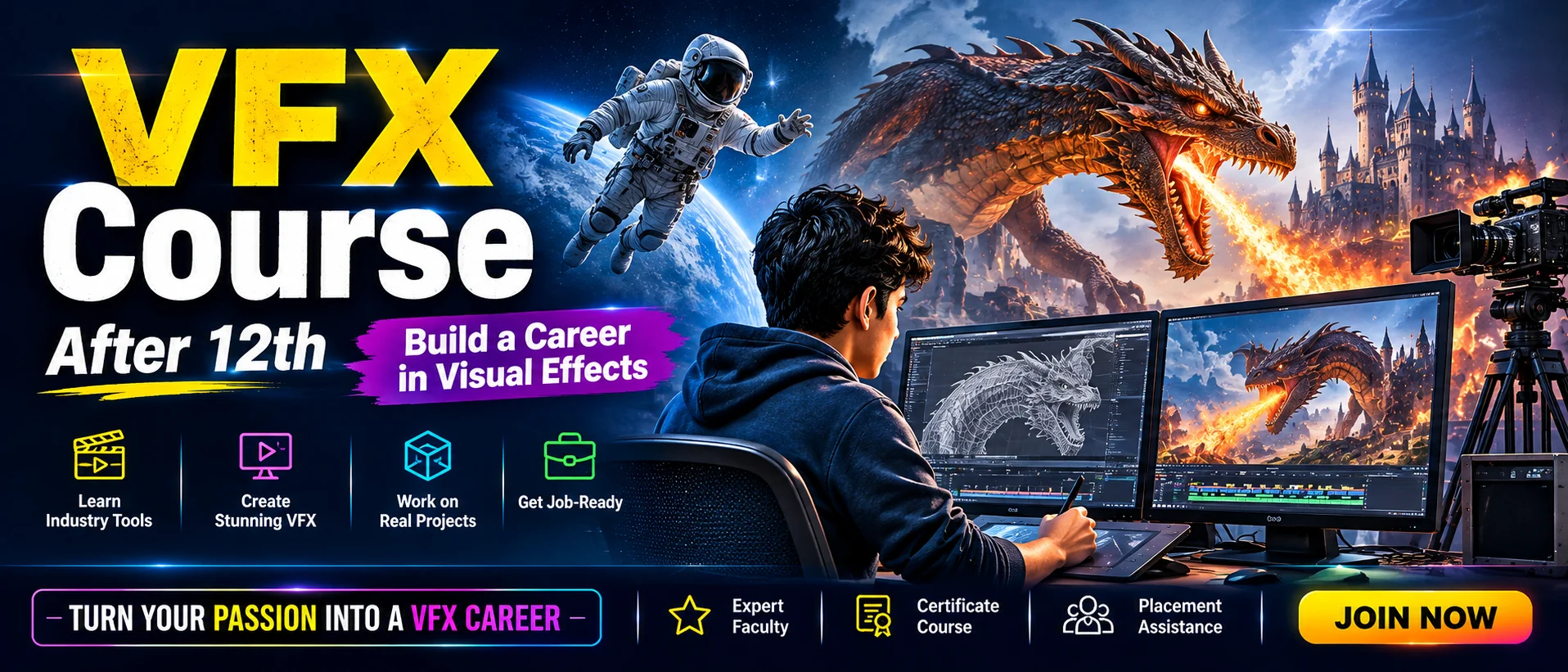
Have you ever watched movies like Baahubali, RRR, Avatar, Avengers, or popular web series and wondered how those incredible explosions, creatures, futuristic cities, and magical effects are created?
The answer is Visual Effects (VFX).
Today, VFX has become one of the most exciting and fastest-growing career options for students after 12th. With the rapid growth of OTT platforms, gaming, films, advertising, and digital content creation, the demand for skilled VFX artists is increasing every year.
If you have recently completed your 12th and are considering a creative career, a VFX course can help you enter an industry that combines imagination, technology, and storytelling.
This guide covers everything you need to know about pursuing a VFX course after 12th, including eligibility, career opportunities, salary expectations, required skills, and future scope.
VFX (Visual Effects) refers to the process of creating or enhancing visuals that cannot be captured during live-action filming.
Using advanced software and digital techniques, VFX artists create realistic effects such as:
Visual effects make impossible scenes appear realistic on screen.
Without VFX, many modern films, television shows, advertisements, and games would not be possible.
Yes. Students from all educational backgrounds can pursue a VFX course after completing their 12th standard.
Whether you belong to:
You can start your journey in the VFX industry.
Most professional training institutes focus more on creativity, dedication, and willingness to learn rather than academic percentages.
Many students worry that low marks will affect their career opportunities.
The good news is that the VFX industry values skills more than academic scores. Employers typically evaluate candidates based on:
A student with average marks but excellent VFX skills often has better job opportunities than someone with high marks but limited practical knowledge.
Your portfolio speaks louder than your report card.
No. This is one of the biggest misconceptions about VFX.
Unlike traditional art careers, many VFX roles do not require advanced drawing skills.
Instead, professionals use industry-standard software to create and manipulate visual elements.
While artistic understanding is beneficial, most VFX artists rely on:
Even students with little or no drawing experience can build successful careers in VFX.
VFX is not difficult if you are genuinely interested in films, technology, creativity, and visual storytelling.
Like any professional skill, mastering VFX requires:
Initially, software interfaces may seem complex, but with proper training and practical projects, students quickly become comfortable with industry workflows.
The key is regular practice and project-based learning.
Most of these skills are developed during professional VFX training.
Professional VFX artists work with advanced software such as:
Learning these tools significantly increases employability in the entertainment industry.
The VFX industry offers diverse career paths across multiple sectors.
| Industry | Description |
|---|---|
| Film Industry | Creating visual effects for movies and web series. |
| OTT Platforms | Producing high-quality visual content for streaming platforms. |
| Television Industry | Enhancing television shows and commercial productions. |
| Advertising Agencies | Creating visual effects for advertisements and brand campaigns. |
| Gaming Industry | Developing cinematic sequences and realistic game environments. |
| AR/VR Industry | Building immersive virtual experiences. |
| Digital Media Companies | Producing content for social media, YouTube, and online marketing campaigns. |
After completing a VFX course, students can work as:
| Job Role | Description |
|---|---|
| VFX Artist | Creates and integrates visual effects into scenes. |
| Compositor | Combines multiple visual elements into a final shot. |
| Roto Artist | Isolates objects and characters from footage. |
| Matchmove Artist | Tracks camera movement for accurate CGI integration. |
| Lighting Artist | Creates realistic lighting for digital scenes. |
| FX Artist | Develops effects such as fire, smoke, water, explosions, and destruction. |
| Tracking Artist | Analyzes movement within live-action footage. |
| Paint Artist | Removes unwanted objects and enhances scenes. |
| CG Generalist | Handles multiple aspects of visual effects production. |
| Unreal Engine Artist | Creates real-time visual environments and virtual production assets. |
Salary depends on your skills, portfolio, location, and experience level.
Entry-level professionals typically earn:
₹2.5 LPA – ₹5 LPA
Professionals with 3–5 years of experience often earn:
₹5 LPA – ₹12 LPA
Experienced VFX supervisors and specialists can earn:
₹12 LPA – ₹25 LPA or more
Many VFX artists work remotely with international studios and production houses, earning additional income through freelance projects.
India has become a major hub for animation and VFX production.
Factors driving industry growth include:
As content consumption continues to grow, the need for skilled VFX professionals will continue to increase.
The future of VFX looks stronger than ever.
Emerging technologies creating new opportunities include:
Professionals who continuously upgrade their skills can enjoy long-term career growth and global opportunities.
Many students attempt to learn VFX through free online tutorials.
While tutorials can be helpful, professional training provides:
These advantages help students become job-ready faster.
MAAC is one of India's leading institutes for animation, VFX, gaming, and multimedia education.
Students benefit from:
The courses are designed to prepare students for real-world industry requirements.
If you have completed your 12th and dream of working on blockbuster movies, OTT shows, gaming projects, advertisements, or digital productions, a VFX course can be an excellent career choice. You do not need exceptional academic marks or advanced drawing skills to succeed. What matters most is your creativity, dedication, technical skills, and willingness to learn. With the right training, strong portfolio, and continuous practice, you can build a rewarding career in the ever-growing world of Visual Effects.
The demand for talented VFX professionals is increasing globally, making this one of the most exciting creative career options available today.