

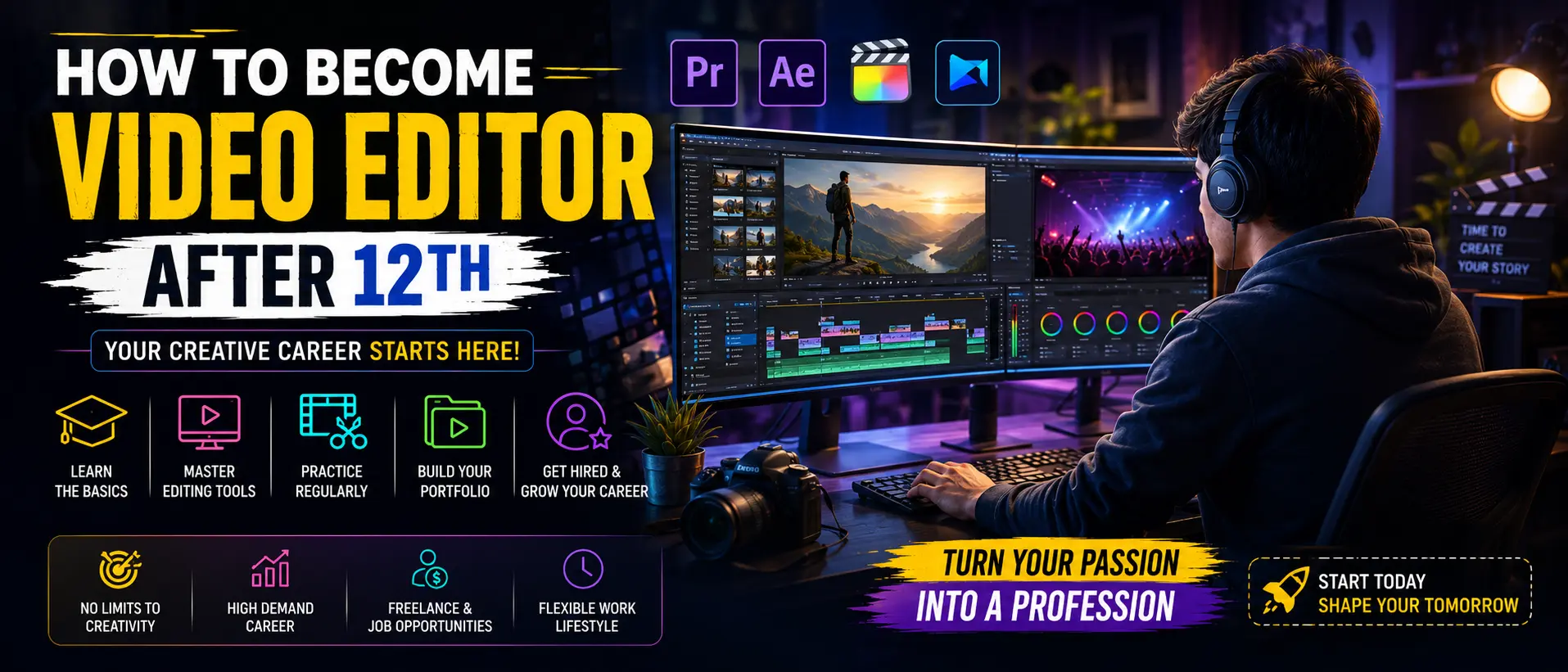
Are you passionate about creating videos, editing reels, or producing cinematic content? If you’ve recently completed your 12th and are looking for a creative career, becoming a video editor can be an excellent choice.
With the rise of YouTube, OTT platforms, digital marketing, and social media, the demand for skilled video editors is growing rapidly. One of the best ways to start your journey is by enrolling in a Video Editing Course after 12th, where you can learn professional editing techniques, industry-standard software, and real-world workflows.
This guide explains how to become a video editor after 12th, the benefits of joining a video editing course, required skills, career opportunities, salary expectations, and more.
A video editor transforms raw footage into polished and engaging content by combining clips, adding transitions, music, sound effects, titles, animations, and color corrections.
Video editors work on projects such as:
Their goal is to create compelling stories while maintaining high visual quality and audience engagement.
Yes. Students from Science, Commerce, or Arts can pursue video editing after completing Class 12.
Many institutes offer diploma and video editor certificate programs that teach editing techniques, storytelling, motion graphics, post-production, and industry-standard software. Even beginners can develop professional skills through proper training and regular practice.
A professional Video Editing Course provides practical training and prepares students for real-world projects with expert guidance.
Typical course modules include:
Finish your higher secondary education from a recognized board. Your academic stream does not limit your opportunity to enter the video editing industry.
Enrolling in a structured video editing course helps you learn editing techniques faster and gain hands-on experience through practical projects.
A good course should include:
Popular tools used by professional editors include:

Adobe Photoshop

Adobe After Effects

Adobe Premiere

Adobe Audition

AI Tools

CapCut and other short-form editing tools
Employers often judge your skills through your portfolio rather than your marks. Create projects such as:
Internships, freelance assignments, and personal projects help improve your editing skills while giving you exposure to real client requirements.
Stay updated with AI-powered editing tools, cinematic color grading, vertical video formats, and motion graphics to remain competitive in the industry.
| Career Opportunity | Description |
|---|---|
| Film Production Companies | Edit movies, short films, trailers, and behind-the-scenes content. |
| Television Channels | Work on TV shows, news segments, reality programs, and promotional videos. |
| Advertising Agencies | Create engaging commercials, brand campaigns, and promotional videos. |
| Digital Marketing Firms | Edit social media ads, marketing campaigns, and online promotional content. |
| News Organizations | Produce and edit news reports, interviews, and documentary-style videos. |
| Animation Studios | Combine animation sequences, visual effects, and sound into final productions. |
| OTT Platforms | Edit web series, documentaries, and streaming platform content. |
| YouTube Production Houses | Create engaging videos for creators, influencers, and branded channels. |
| Event Management Companies | Edit wedding films, corporate events, concerts, and promotional highlights. |
| Corporate Media Teams | Produce training videos, presentations, product demos, and internal communications. |
| Freelance Video Editing | Work independently with clients worldwide on projects for social media, businesses, and entertainment. |
| Experience Level | Average Salary in India |
|---|---|
| Entry Level (0–2 Years) | ₹2.5 – ₹4.5 LPA |
| Mid-Level (3–5 Years) | ₹5 – ₹8 LPA |
| Experienced (5+ Years) | ₹8 – ₹15 LPA or more |
| Freelance Video Editor | Varies based on projects, clients, expertise, and workload |
Professionals with expertise in VFX, motion graphics, and advanced color grading often command higher salaries.
Yes. Video editing is one of the fastest-growing creative professions today. With increasing demand from content creators, businesses, OTT platforms, and marketing agencies, skilled editors have excellent career prospects.
No. While a college degree can be beneficial, many employers prioritize practical skills, proficiency with editing software, and a strong portfolio over formal educational qualifications.
Students from Science, Commerce, and Arts streams can all pursue a career in video editing after completing their 12th. Passion, creativity, and technical skills are more important than your academic background.
Basic video editing skills can be learned within a few months. However, becoming job-ready typically takes around 6 to 12 months of consistent learning, hands-on practice, and portfolio development.
Yes. Many video editors work as freelancers, providing editing services to YouTubers, brands, marketing agencies, startups, and international clients. Building a strong portfolio can help you attract freelance opportunities.
No. Video editing does not require coding skills. Success in this field depends more on creativity, storytelling ability, attention to detail, and proficiency with professional video editing software.
Choosing video editing after 12th can open doors to exciting opportunities in entertainment, advertising, social media, and digital content creation. Enrolling in a professional Video Editing Course equips you with practical skills, software expertise, and industry knowledge while helping you build a portfolio that showcases your talent. If you are passionate about storytelling through visuals and enjoy working with technology, now is an excellent time to begin your journey as a video editor.